
Summary
Between 2014 and 2019 we structured the financing of transmission lines and power generation in Central America. The assets were bought by state utilities under long concessions and power purchase agreements, built by private developers, and financed against the contracts rather than against the developers’ balance sheets. The counterparties have asked not to be named and we have respected that. What follows is the method as it was actually applied: what each sponsor came to us with, what we built, and what we took away.
It matters because this is where our transmission and generation practice comes from. The three method papers in this series describe what we do; this is the work that taught us to do it.
1 · The situation
Central America in the middle of the last decade had a transmission and generation gap, a regional power market that rewarded new capacity, and a set of national utilities, state-owned and regulated, in some countries backed by sovereign undertakings, that were ready to sign long availability concessions and PPAs. What it did not have was long money. Local banks lent short and in local currency. International banks lent against sponsor balance sheets the sponsors did not have. The development lenders were slow and chose carefully.
The sponsors we worked with were regional developers: good engineers, close to the utilities and the regulators, land and permits in hand, and no balance sheet that could carry twenty-year debt. Each held a concession or a PPA that was a better credit than the company holding it. The job was to finance the contract.
2 · Transmission
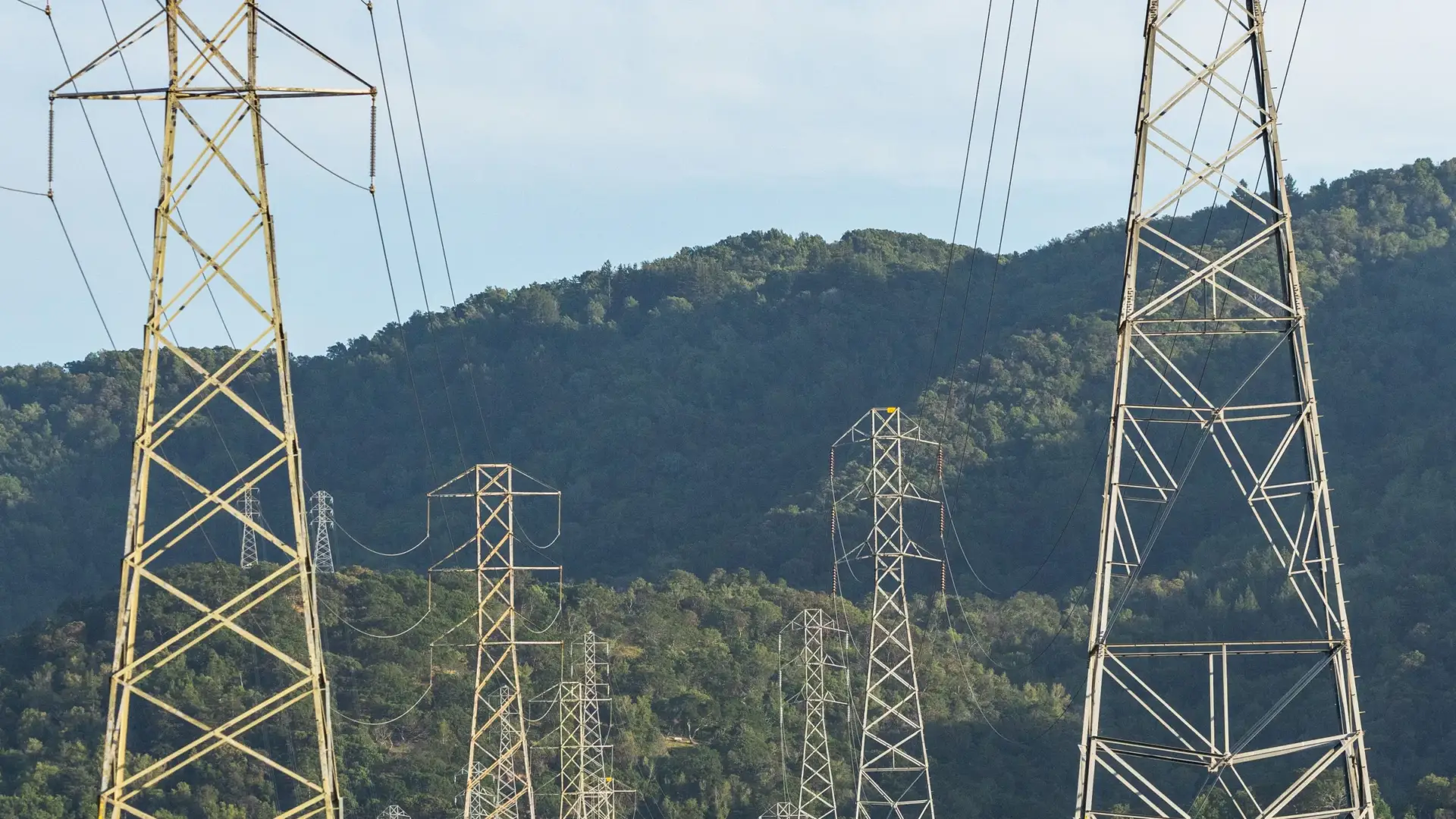
The assets were high-voltage lines under long concessions from the national utility, paid an availability tariff, indexed, net of availability deductions, with a periodic regulatory reset, for the life of the concession.
The sponsor needed capital to build and then wanted that capital back to build the next line. The utility’s tariff was sound. The sponsor’s balance sheet was not bankable for the tenor the concession deserved. And construction, which meant rights of way, permits and terrain, was the risk every lender priced first.
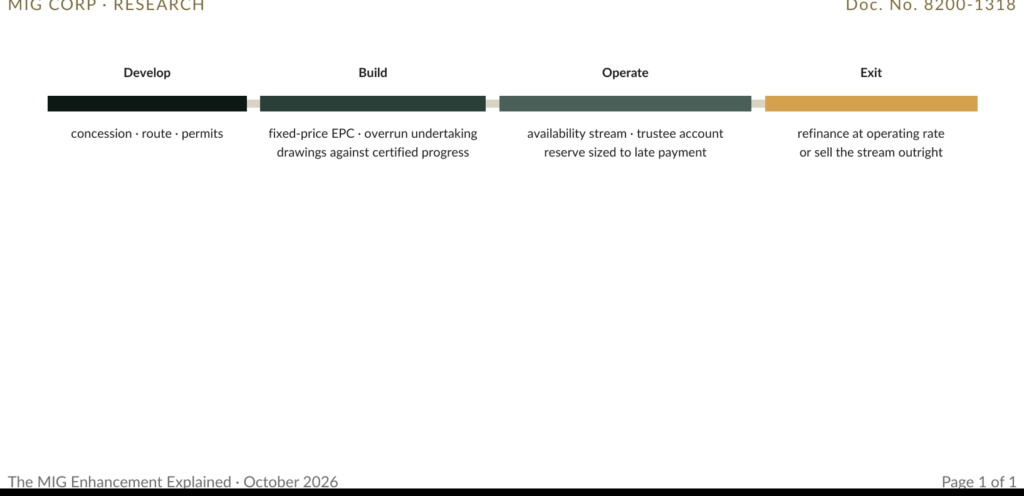
We assigned the concession rights, the availability contract and the receivables to a vehicle set up for the line. Construction was carried by a fixed-price, date-certain contract with delay damages, a sponsor overrun undertaking, and drawings released against certified progress. Once the line was commissioned we valued the availability stream layer by layer, base tariff at face, indexation at a conservative rate, post-reset years at a haircut, tail at nothing, and sized the debt against it with a coverage ratio that reflected the absence of dispatch risk and a reserve sized to late payment by a state utility. The utility paid the vehicle’s trustee-controlled account, not the sponsor.
Once in operation and with an availability record behind it, the stream was refinanced at the lower rate operation justified. In one case the contracted revenue was sold outright so the sponsor could put the money into its next concession. Same valuation both times; what changed was who kept the tail.
3 · Generation
The assets were plants under long PPAs with the national utility, capacity-based, with the capacity charge covering debt service and fixed costs and the energy charge covering dispatch.
The problem was the same: a contract stronger than its holder. Two further questions arose. Fuel or resource, and currency. Where the plant was thermal the lender needed fuel passed through; where it was renewable, a conservative resource case. The PPAs were dollar-indexed, which closed the currency question, and transfer was dealt with through the central bank.
The PPA, the plant and the contracts went into a dedicated vehicle. Payment security, escrow and letters of credit covering months of capacity payments, turned the utility’s promise into cash the trustee held. Termination provisions repaid the debt if the utility walked away; step-in rights kept the PPA alive if the sponsor failed. The debt was sized against capacity revenue alone, with dispatch revenue treated as cushion, and the tenor set inside the PPA with a tail.
The lesson here was about the sovereign link. It was the credit, and the structure’s job was to tie the stream to it as tightly as the documents allowed, through the undertaking, the escrow and the trustee account, while keeping the debt off the state’s books by making the state’s obligation a purchase of available capacity rather than a guarantee of a loan.
4 · What we took away
The sponsor’s balance sheet was never the credit. The contract and the structure were, in both asset classes.
Lines are cheap to run and hard to build. Plants are hard to run and easy to contract. The reserves and the protections were sized to match, and we have sized them that way ever since.
State utilities paid. They paid late. Escrow and a debt-service reserve sized to the payment-timing case were the protections that earned their keep, more than any guarantee.
Tenor was the product. Twenty-year concessions deserved twenty-year money, and the structure’s ability to match tenor, which bank balance sheets could not, was the reason sponsors came to us at all.
Each financing was built to be refinanced or sold once in operation. The sponsor got its capital back. The next project got built.
5 · The same deals today
Under the MIGCorp Bond method the vehicle would issue a rated bond instead of borrowing from banks. Our guarantee and an insurance wrap would lift the vehicle to investment-grade standard where the utility’s support alone did not. Reserves in cash and government securities, hedged rates and repo lines would sit inside. The sponsor would commit 10% in cash or in kind. The bond’s tenor would match the concession or the PPA. The valuation, the construction protections, the payment security and the exit would be as described above. What would differ is the market the paper was sold into, and therefore the price.
Counterparties, facility sizes and tenors are not disclosed. Further information is available under NDA from investments@mig-corp.com.
MIG Corp publishes research on the structuring and financing of emerging-market infrastructure. Related papers: The MIG Enhancement Explained (8200-1318); When the power is late, who pays? (8200-1319); MIGCorp Bond one-pager (8200-1313); Financing AI Data-Centre Power (8200-1312); Floating LNG-to-Power for AI Data Centres (8200-1311). Further information on specific transactions is available under NDA from investments@mig-corp.com.
This paper is for information only and does not constitute an offer or solicitation. MIG International Ltd — RAK ICC Reg. No. A002/09/12/5254 — investments@mig-corp.com · mig-corp.com
The MIGCorp Bond™ is not a corporate bond of MIG International Ltd, is not a fund, and is not an offer of securities to the public. Each issuance is separately documented and separately rated, and is made available only to qualified institutional and professional counterparties. An investment-grade rating is sought for the issuing vehicle of each transaction; whether it is obtained, and at what level, depends on the structure, the credit profile and the agency’s own assessment. No rating is guaranteed. Worked examples are illustrative and do not describe any specific transaction or counterparty.
© 2026 MIG International Ltd. This paper may be quoted and shared with attribution and a link to mig-corp.com; it may not be sold or altered.